
Air Quality: Indoor, Outdoor and Fires
CNEHJ is educating and engaging nurses on the negative health effects attributed to poor air quality and wildfire smoke.
Air Quality
California has the dubious distinction of having many of the worst air polluted cities in the country. More than 90% of Californians breathe unhealthful air during some part of the year, harming people’s health and the economy, not counting fire smoke-related air pollution.
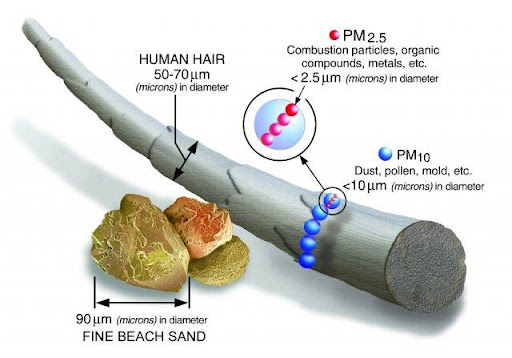
Air pollution particles are categorized by their size. While our natural defenses can help remove some coarse particles, fine and ultra-fine particles can get deep within the lungs, with the smallest able to enter the bloodstream.
Health Risks
Women and Children
- PM2.5 exposure alters size of children’s brain development resulting in cognitive and emotional problems
- Polycyclic aromatic hydrocarbon (PAH) exposure is associated with brain development problems resulting in slower processing, ADHD symptoms, and neurodevelopment
- PAH exposure during pregnancy is associated with low birthweight babies
- Fine particle exposure during the 3rd trimester of pregnancy is associated with three times the risk of having a autism
- Fine particle exposure during the 2nd/3rd trimesters is associated with high blood pressure in the child early in life
- High levels of pollution during the first 8 weeks of pregnancy is associated with high risk for neural tube defects (i.e., spina bifida, anencephaly)
Respiratory
- Air pollution exposure is associated with lung development, asthma, and COPD
Cardiovascular Disease
- Air pollution is associated with impaired blood vessel function, calcification of arteries, and lower “good cholesterol”
- Air pollution exposure during pregnancy is associated with hypertension during pregnancy
Cancer
- Air pollution is associated with breast cancer
- Occupational exposures to benzene in air is associated with leukemia and non-Hodgkin’s Lymphoma
Psych/Mental Health
- Air pollution is associated with increased risk of mental health and psychiatric services for schizophrenia, bipolar, and depression
- Fine Particle exposure and nitrogen oxide are associated with increased risk of a mental illness diagnosis at 18 years old
Older Adults
- Fine particle exposure is associated with increased risk for dementia
- Air pollution in general is associated with Parkinson’s Disease, Alzheimer’s, and other types of dementia
- Long-term exposure to air pollution hastens physical decline. This is more pronounced in poor communities and communities of color
Rural Dwellers
- Fine particle exposure is associated with asthma signs and symptoms
- Proximity to large scale animal feeding operations is associated with acute lung function problems with children
California’s Air Pollution
Most of the worst air polluted cities are in the Central Valley.
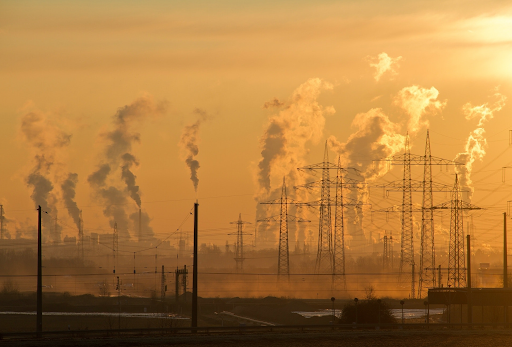
Where the combination of agricultural pollution from tilling and spraying, the vehicular pollution from two major north/south highways with lots of truck traffic, pollution from the oil fields in and around Kern County, and the now ubiquitous fire season’s smoke are all compounded by a geography that tends to keep the pollution within two mountain ranges. Coastal communities tend to have far healthier air.
Air Pollution by Zipcode
In California, we can view our air pollution levels in real time through the Air Quality Index Website. Here’s the key to the map’s color coding:
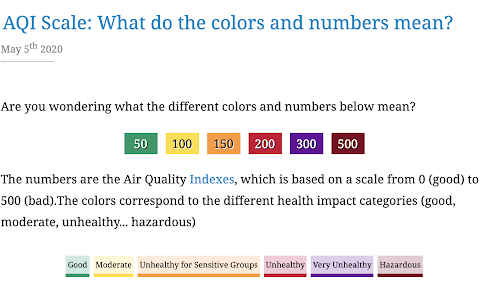
You can also put your zipcode into the AirNow page and get find the status on an hourly basis as well as a forecast for tomorrow’s air quality.
Air pollution is regulated nationally by the U.S. Environmental Protection Agency where basic pollution standards are established for a set of 6 pollutants known as Criteria Air Pollutants, explained on the EPA’s Criteria Air Pollutants website.
The California Air Resources Board (CARB) is the subagency with the California Environmental Protection Agency (known as CalEPA) that is responsible for regulating air pollution in the state.
Beyond CARB, geographical regions in California are further divided into air districts. These districts are CARB’s primary partners that work to protect California’s air quality. Check your region’s air quality entity at CARBs list of California Air Districts.
Indoor Air Quality
North Americans Spend an Average of 90% of their Time Indoors
The significant amount of time spent in homes, workplaces, schools and in various indoor spaces makes the quality of the air we breathe inside just as vital to our health as the air we breathe outside.¹ We often think of air pollution as an outdoor issue, however, you might be surprised to learn that indoor air pollutants can be 2-5 times and sometimes even 100 times higher than outdoor quantities.² The pollutant variability is dependent on factors such as home ventilation systems, residence size and location, residence age and more. Similar to many outdoor pollutants, indoor pollutants can be invisible and odorless, and most people are unaware of their existence and their associated health risks.
As nurses and health professionals it is important to have an understanding of what contributes to indoor air pollution and how to address these pollutants. Many pollutants not only affect our own home environments, but also impact the health of our patients and communities. With awareness and evidenced-based guidance, we can take many simple actions to prevent, reduce and even eliminate sources of indoor air pollution.
EPA Home Example of Where Indoor Air Pollutants Live
Indoor Air Pollution DOES NOT Affect Everyone Equally
Everyone is at risk of exposure to indoor air pollutants. However, there are some populations that are more vulnerable to exposures and the associated health risks and therefore, should be prioritized to protect their health and well-being.
Pregnancy, Infants and Children ³ ⁴
-
- Indoor air pollutants can impact the health and development of babies before they are born. Air pollution may indirectly harm lung development by causing low birth weight, preterm birth, or improper immune system development.
- Environmental exposures during fetal development and the first few years of life have the greatest potential to influence growth and development later on.
- Children and infants have higher breathing rates, higher lung surface to body size ratio and an immature respiratory and immune system. All of these factors make them more at risk for negative health effects from indoor air pollutants compared to adults.
Elderly, Chronically Ill and Disabled ¹
-
- Being that North Americans spend the majority of their time indoors, the elderly, chronically ill and disabled are even more susceptible to experience barriers that prevent them from going outdoors.
- Some of these barriers include transportation, inadequate support, inadequate resources and illness.
- Elderly people are also more likely to have chronic health conditions. Chronic health conditions in addition to age >65 years can affect the body’s ability to effectively eliminate chemicals from the body.

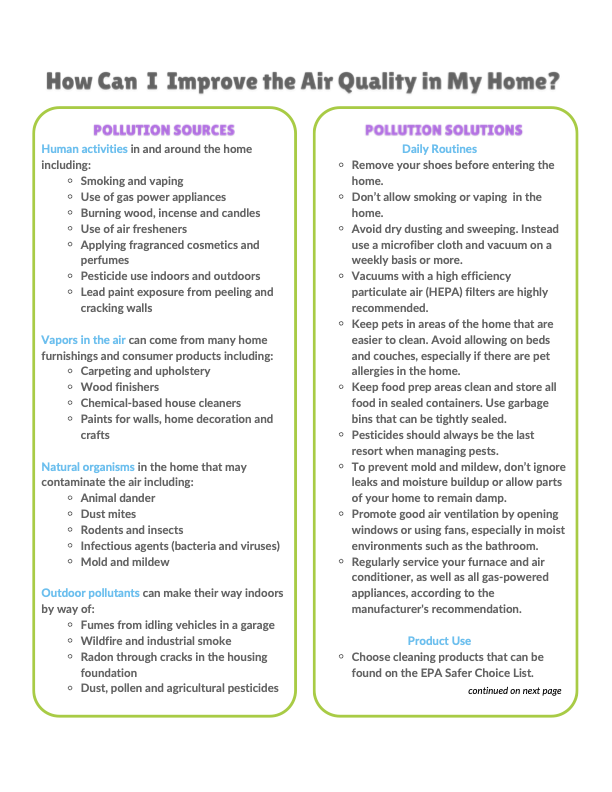
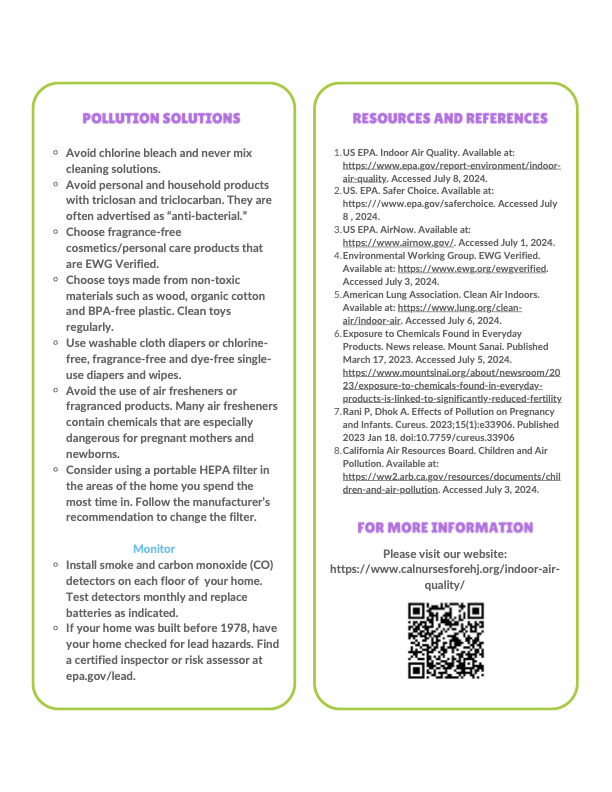
Clean Air for Little Lungs: How to Prepare for Newborns and Children
Our Preparing the Air for Newborns and Children tool is a handout intended for parents who require guidance on creating “air healthy” rooms in the home. This might be be distributed by health care providers when meeting with expecting parents or when meeting with parents that have children with chronic asthma, allergies and other related conditions.
Indoor Air Quality Patient Tools
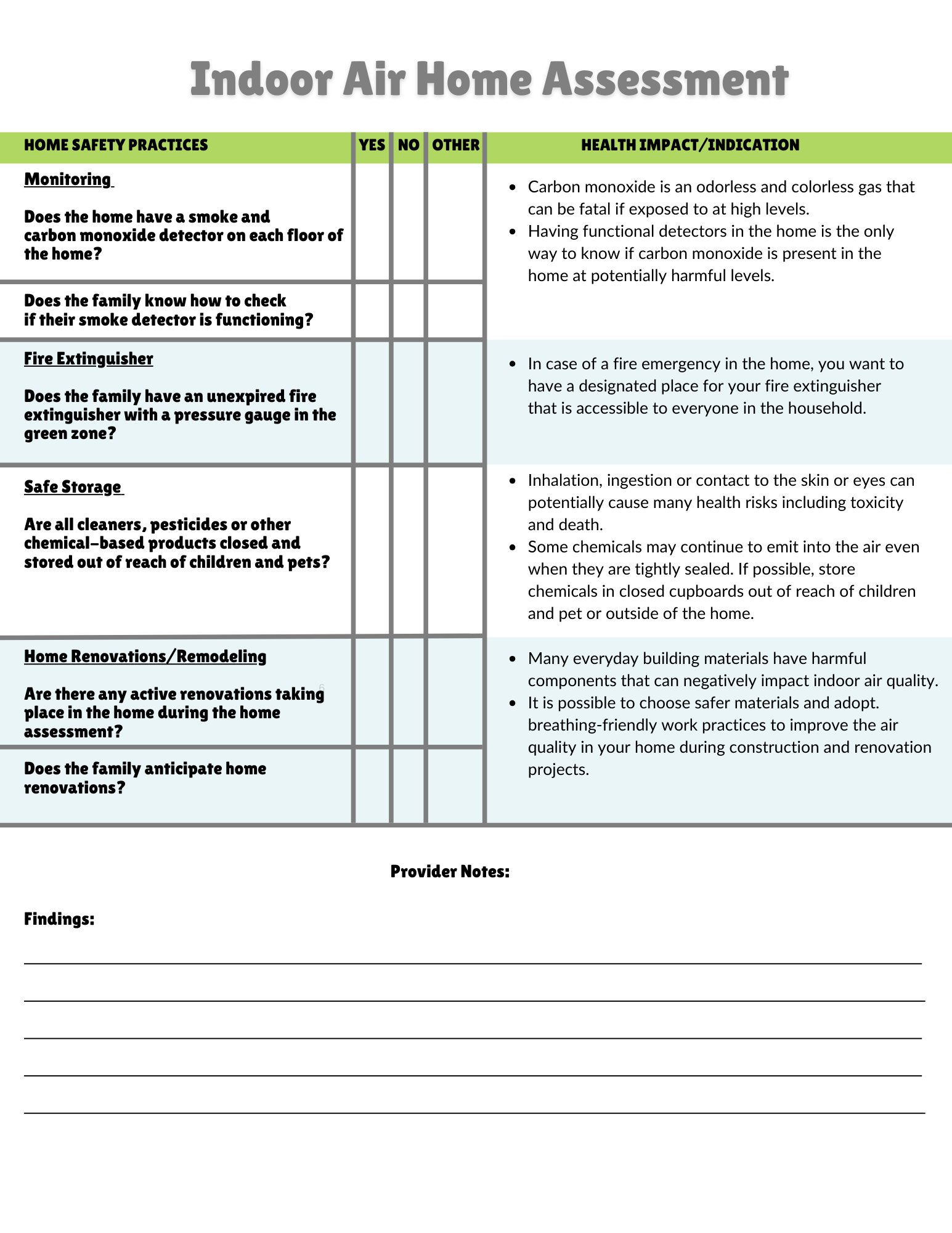
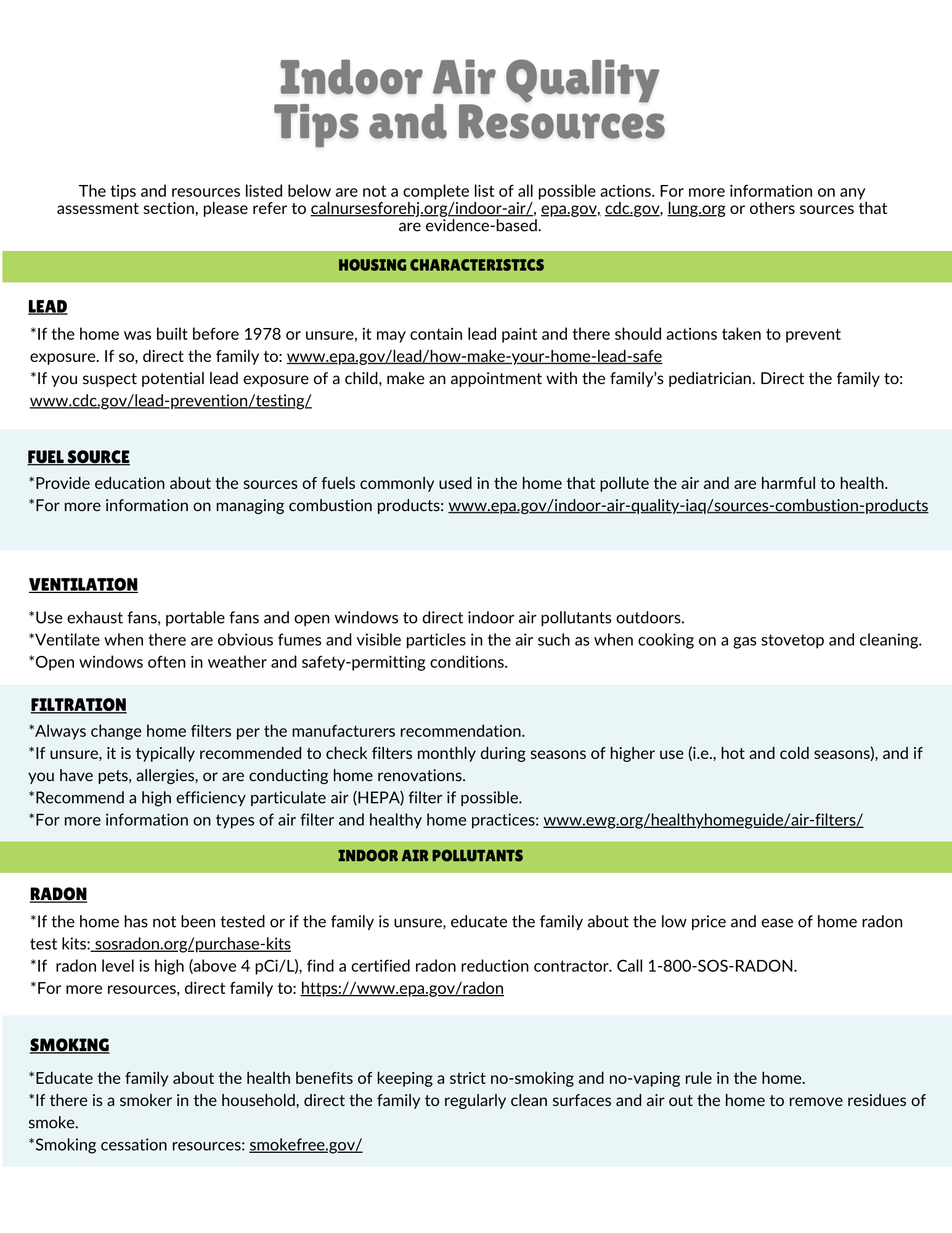
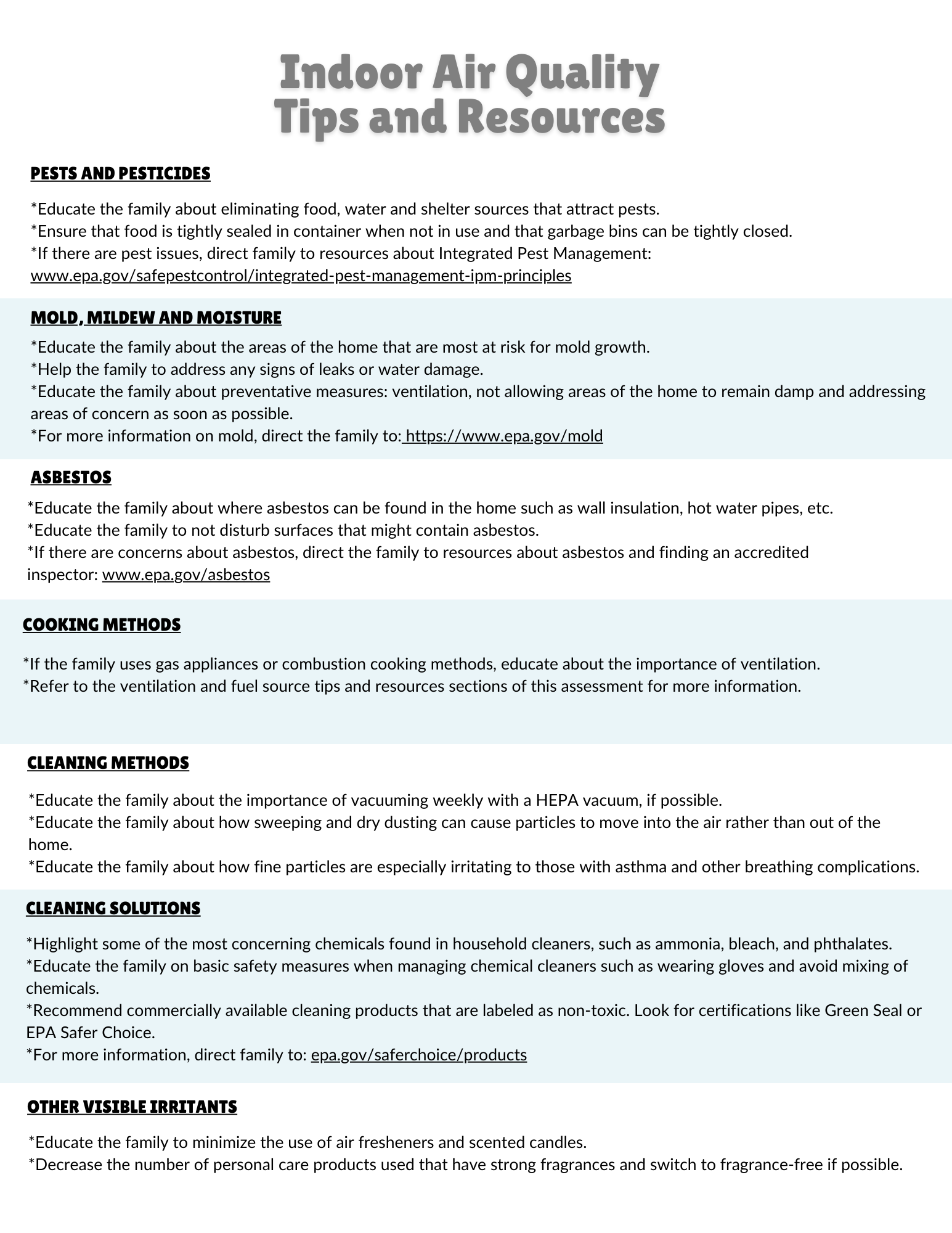
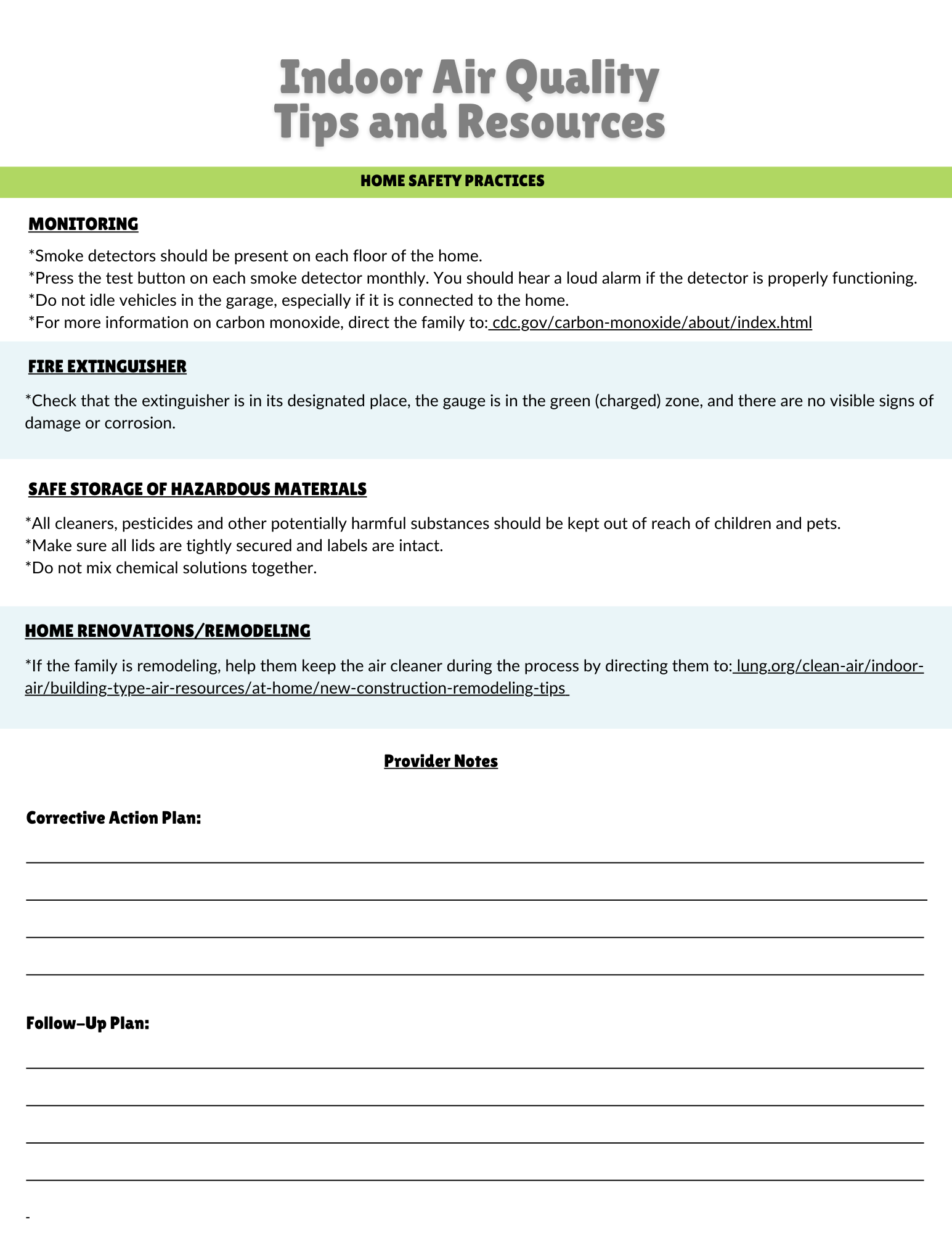
For healthcare providers and our patients, we created a tool to help assess and improve indoor air quality in homes. The Indoor Air Home Assessment tool is intended to help the health provider identify indoor air pollutant sources in the home that can potentiate health risks. It will provide a generalized home health environmental assessment with a focus on air quality, the associated health impacts and simple tips and resources to address areas of concern.
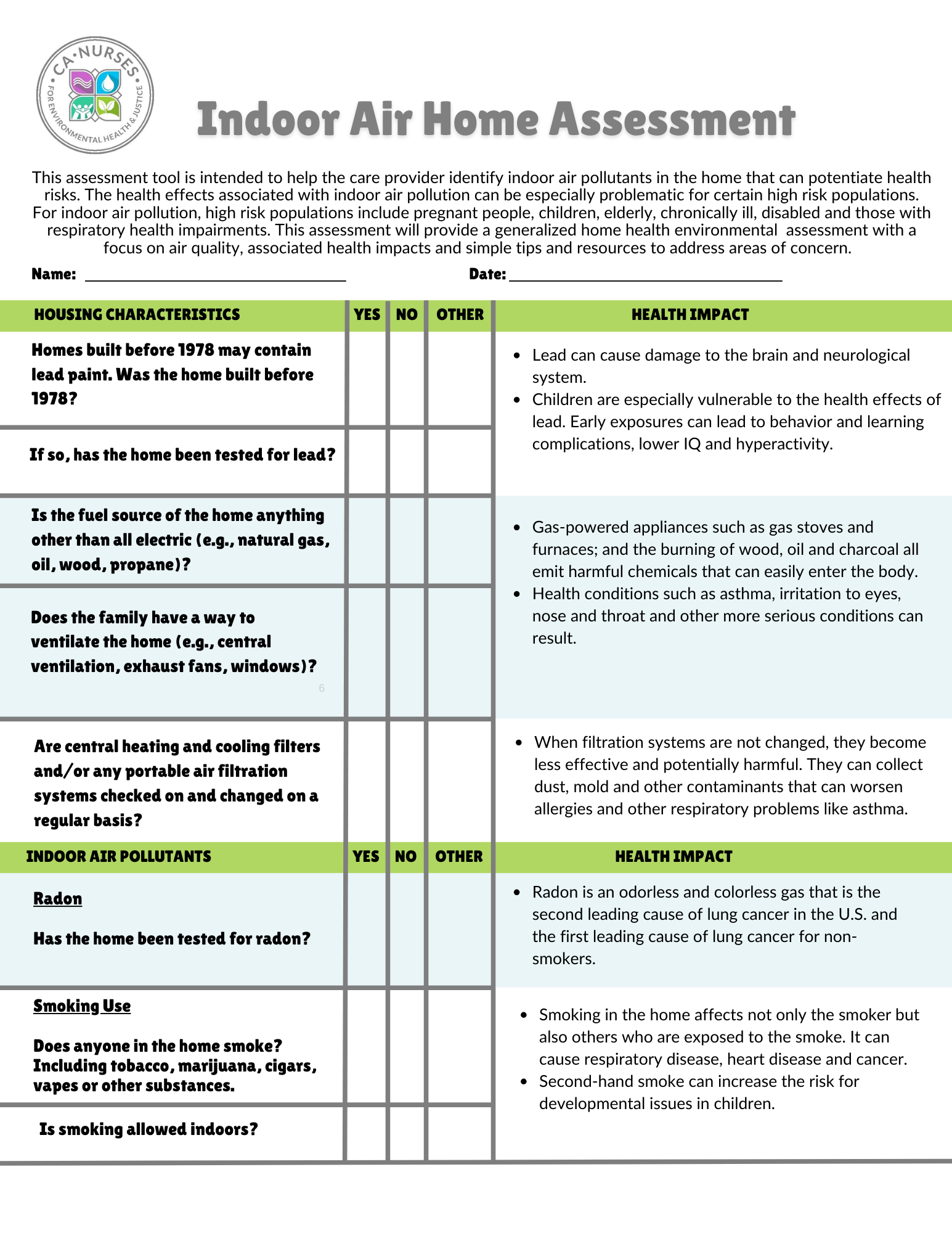
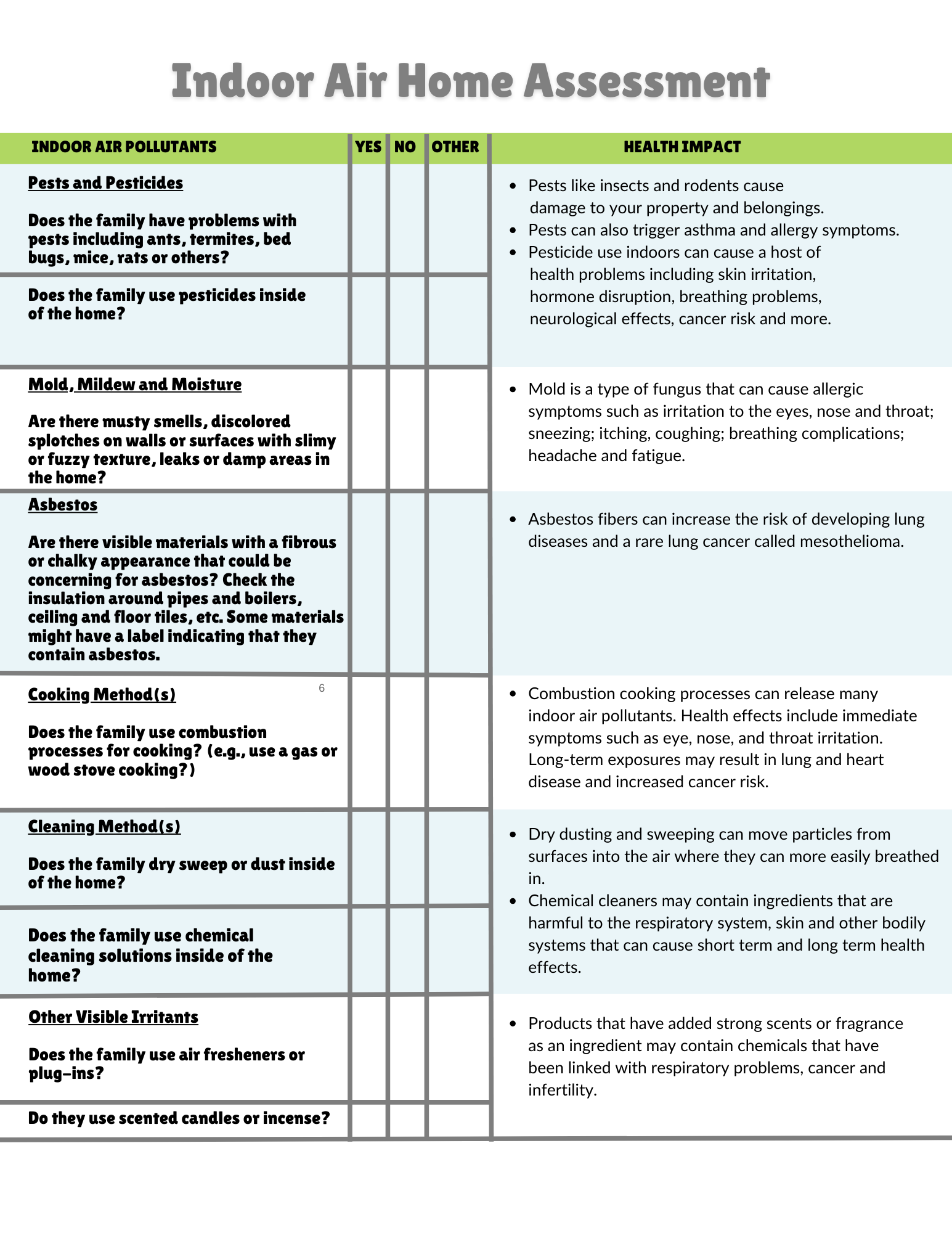
Indoor Air and Climate Change
The impacts of our changing climate are associated with a range of health risks. In addition to the news headliners like extreme weather events and fires, there are indirect ways in which climate change is affecting our indoor environments. In areas that are affected by drought conditions, increased dust results in higher levels of particulate matter in the air both outdoors and indoors. The smoke from fires is another significant source of particulate matter, some of which may contain toxic chemicals including heavy metals. In areas of flooding and extreme storms, homes may become water damaged, increasing the risk for mold. Climate change is also associated with prolonged pollen seasons that can trigger allergies and asthma for longer periods of the year.
Environmental Health Inequities
There are many factors such as systemic racism and discriminatory historical and ongoing housing and transportation policies that have led to an unequal burden of indoor air exposures and health risks amongst certain populations.
Race and Ethnicity ⁵
People of color, especially black and brown people, experience some of the greatest air quality disparities. Black and brown people that have suffered from racist policies such as Redlining and the Federal Housing Act of 1949 have often been pushed into substandard housing with limited or absent regulatory processes.
Socioeconomic Position ⁶
Income has an immense impact on many aspects of our lives and our health. The following include some ways in which income impacts indoor air quality: lower-income households are often smaller and house more people; are homes with older structures and appliances; are less likely to have adequate ventilation; and are more likely to be located near polluted outdoor areas such as highways and warehouses.
Location of Residence ⁷
People who live closer to major sources of pollution such as active highways and polluting industrial areas have greater exposures to particulate pollution from outdoors. Historically, most of these residences are in communities of color that have been impacted from discriminatory policies such as the Federal Aid Highway Act of 1956. This particular act demolished and severed many black and brown neighborhoods by building polluting transportation infrastructure through them.
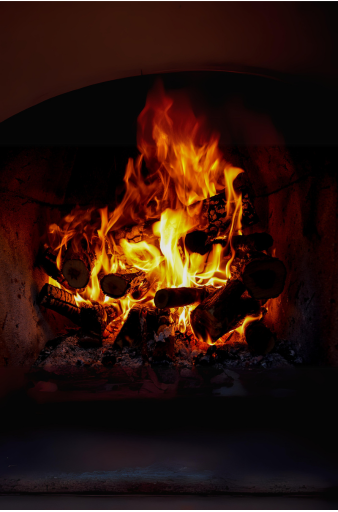
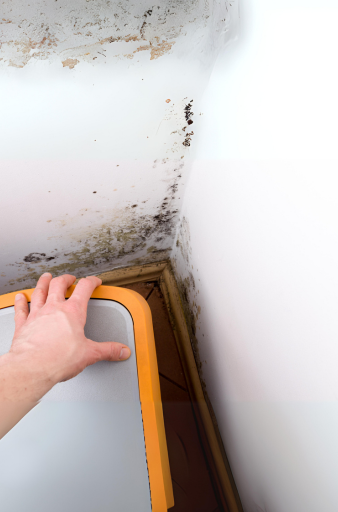
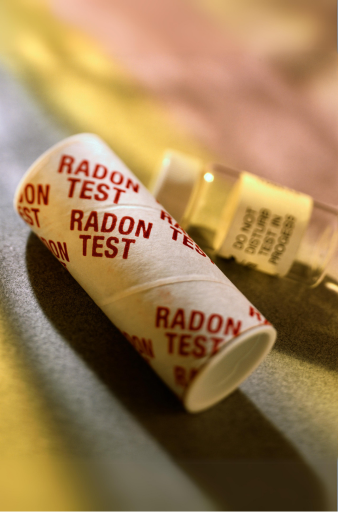
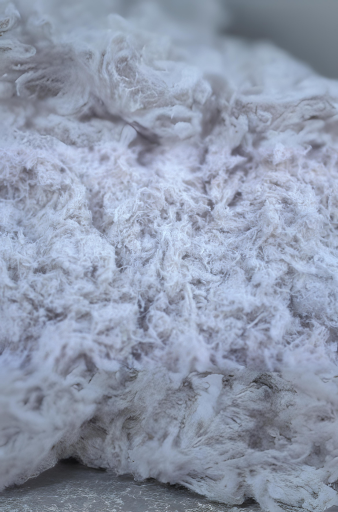
Learn More about Individual Indoor Air Pollutants


Reference List
1. US EPA. Indoor Air Quality. Available at: https://www.epa.gov/report-environment/indoor-air-quality. Accessed July 8, 2024.
2. American Lung Association. Clean Air Indoors. Available at:https://www.lung.org/clean-air/indoor-air. Accessed July 6, 2024
3. Rani P, Dhok A. Effects of Pollution on Pregnancy and Infants. Cureus. 2023;15(1):e33906. Published 2023 Jan 18. doi:10.7759/cureus.33906
4. California Air Resources Board. Children and Air Pollution. Available at: https://ww2.arb.ca.gov/resources/documents/children-and-air-pollution#. Accessed July 6, 2024.
5. Authenticated US Govenment Information. Housing Act of 1949 (Section 2 and Title). Available at: https://www.govinfo.gov/content/pkg/COMPS-10349/pdf/COMPS-10349.pdf. Accessed July 7, 2024.
6. National Library of Medicine. Moving Environmental Justice Indoors. Available at: https://www.ncbi.nlm.nih.gov/pmc/articles/PMC3222513/. Accessed July 7, 2024.
7. The Washington Post. Interstate highways were touted as modern marvels. Racial injustice was part of the plan. Available at: https://www.washingtonpost.com/history/2021/08/16/interstate-highways-were-touted-modern-marvels-racial-injustice-was-part-plan/.Accessed July 7, 2024.